Adaptive Facades: How Dynamic Architecture is Shaping Urban Skylines
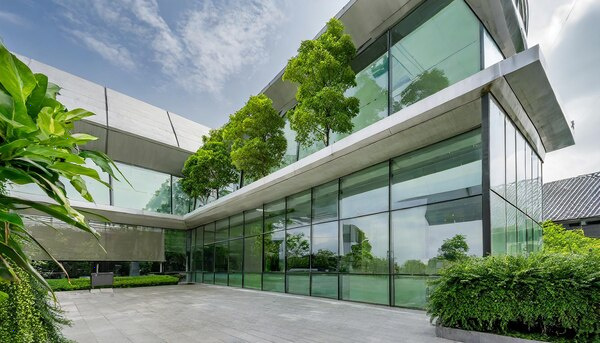
Adaptive facades are quietly transforming the character, performance, and experience of contemporary cities. No longer just protective skins, building envelopes are becoming responsive interfaces that negotiate between climate, occupants, and the urban realm. This shift is driven by climate imperatives, digital design tools, advances in materials, and the growing expectation that buildings should be both efficient and expressive.
At the heart of this change is a simple idea: the outer layer of a building should not be static in a world where conditions are constantly changing. Sun angle, temperature, wind, occupancy, energy prices, and even urban events can vary hour by hour. Adaptive facades use sensors, actuators, and intelligent control systems to respond to these variables in real time, often in ways that are visible and legible on the skyline.
From passive envelopes to responsive systems
Traditional facades, even high‑performance ones, are typically designed as fixed compromises. Shading elements, glazing ratios, and insulation levels are chosen to balance extremes across seasons. The result is frequently an envelope that performs acceptably most of the time but optimally almost never.
Adaptive facades shift this paradigm. Instead of designing for an average condition, architects and engineers design for a range of states. The facade is conceived as a system that can:
- Modulate solar gain and daylight
- Control glare and views
- Regulate ventilation and air exchange
- Store or reflect heat
- Communicate information or identity
This can be achieved through mechanical movement (louvers, shutters, rotating panels), material behavior (thermobimetals, phase‑change materials, electrochromic glass), or combinations of both integrated into a control logic.
Digital simulation and parametric design play a crucial role in this evolution. Designers now routinely test thousands of facade configurations in relation to solar paths, local microclimates, and internal loads, then encode performance targets into the very geometry of the building skin.
Drivers: climate, regulation, and expectation
Several converging pressures are propelling adaptive facades from experiment to mainstream:
- Decarbonization and energy performance
In most commercial buildings, the envelope is a primary driver of heating, cooling, and lighting loads. As cities adopt stricter energy codes and carbon budgets, static envelopes begin to look like missed opportunities. Adaptive shading alone can significantly reduce cooling demand and allow deeper daylight penetration, minimizing artificial lighting use.
- Climate volatility and resilience
Weather extremes and urban heat islands are making narrow‑band design assumptions obsolete. Facades that can switch between modes—shading vs. harvesting sun, sealed vs. ventilated—offer resilience in the face of temperature swings, heat waves, and poor outdoor air quality.
- Occupant comfort and wellbeing
People want access to daylight and views, but they also expect thermal and visual comfort without constant manual adjustment of blinds and thermostats. Adaptive systems can reconcile these demands by responding at a finer time scale than human intervention alone.
- Branding, identity, and media
Urban skylines are communication platforms. Adaptive facades capable of subtle or spectacular transformations—through light, pattern, or movement—have become tools for corporate identity, cultural expression, and civic storytelling.
Typologies of adaptive facades
Adaptive facades are not a single technology but a family of approaches. Several dominant typologies have emerged:
1. Kinetic shading systems
These are perhaps the most visually recognizable. Arrays of louvers, panels, or modules change position in response to solar position, daylight targets, or internal loads. Actuation may be mechanical (motors, pistons) or material‑based (shape‑memory alloys, thermobimetals).
Typical functions include:
- Blocking direct sun while preserving diffuse daylight
- Allowing low winter sun in while excluding high summer sun
- Opening views where glare is minimal and closing where it is intense
These systems often become the signature visual feature of a building, animating the facade as it tracks the sun over the course of a day.
2. Responsive glazing
Advances in glass technology have enabled dynamic modulation of transparency, tint, and thermal performance.
Key types:
- Electrochromic glazing that darkens or clears with a small electric current, eliminating the need for internal blinds in many applications.
- Liquid crystal or suspended particle devices that switch between transparent and translucent states, controlling glare and privacy.
- Thermochromic and photochromic materials that respond passively to temperature or light intensity.
These systems enable smoother control of daylight and heat gain without moving parts, making them appealing for tall buildings where maintenance access is constrained.
3. Double‑skin and buffer facades
Double‑skin facades create an intermediate cavity between an inner thermal envelope and an outer protective layer. This zone can:
- Buffer against temperature extremes
- Serve as a chimney for stack‑driven natural ventilation
- House adjustable shading devices protected from wind and weather
By dynamically opening and closing vents, adjusting shading, and controlling airflow, double‑skin systems can shift between winter and summer modes, significantly improving energy performance and comfort.
4. Bioclimatic and biomimetic systems
Some adaptive facades draw explicitly from natural analogues, mimicking how plants, animals, or ecosystems regulate heat, light, and moisture.
Examples include:
- Panels that open and close like stomata in response to humidity or temperature
- Hygroscopic materials that curl or flatten as they absorb or release moisture
- Structural components that expand or contract in response to heat, changing porosity
These systems are often passive—driven by material behavior rather than motors and controls—promising reduced complexity and lower operating energy.
5. Media and communicative facades
At the intersection of architecture and urban media, some facades incorporate LEDs, fiber optics, or reflective elements that can reconfigure visual output. While their primary function is communicative, many are now coupled to environmental sensors, allowing the building to:
- Display real‑time energy use or air quality
- Visualize local weather or climate metrics
- Respond to urban events with dynamic light patterns
This turns the facade into a public interface, making environmental performance visible on the skyline.
Technology stack: sensors, data, and control
The intelligence of an adaptive facade resides less in any single component and more in how components are coordinated. A typical control stack includes:
- Sensors: solar radiation, exterior and interior temperature, wind speed, CO₂ levels, occupancy, illuminance.
- Actuators: motors for louvers, switches for glazing states, valves for airflow, dimmers for integrated lighting.
- Control logic: algorithms that translate sensor inputs, forecasts, and user preferences into coordinated actions.
Increasingly, this logic is data‑driven. Facade systems can:
- Use predictive control based on weather forecasts instead of reacting only to instantaneous conditions.
- Learn from historical building performance to refine strategies for different seasons.
- Coordinate with grid signals, reducing solar gain when electricity is expensive or carbon‑intensive.
Integration with building information modeling (BIM) and digital twins allows ongoing calibration, turning the facade into part of a continuously optimized building ecosystem.
Shaping the skyline: form, perception, and urbanity
The consequences of adaptive facades extend far beyond individual buildings; they are reshaping how cities look and feel.
A new kind of urban motion
Skylines historically changed slowly, with major shifts tied to construction cycles. Adaptive facades introduce a finer temporal granularity: buildings that subtly transform throughout the day and across seasons.
Patterns emerge at the city scale:
- Morning and evening shadow choreography as louvers track low sun.
- Seasonal differences in apparent transparency or reflectivity.
- Night‑time media displays that respond to cultural or civic events.
This produces a dynamic urban image that is less about fixed silhouettes and more about evolving surface conditions.
Material ambiguity and depth
Adaptive facades often create layered, deep envelopes rather than single planar surfaces. Screens, second skins, and kinetic arrays add:
- Visual richness through parallax and changing opacity.
- Ambiguity between interior and exterior, public and private.
- Shadow play that shifts with the time of day.
On dense streets, this can greatly affect pedestrian experience, as buildings feel more porous, animated, or responsive to passing weather.
Recalibrating iconicity
Where previous eras relied on pure form or static ornament for visual identity, adaptive facades encourage a different kind of iconicity based on behavior. A building may be remembered not just for its shape, but for:
- How it glitters, dims, or opens in response to the sun.
- How its pattern changes with urban events.
- How its skin breathes or glows at certain times of year.
This behavioral character can become part of the collective memory of a city, much as clock towers or chiming bells once were.
Environmental performance and urban climate
The impact of adaptive facades on the broader urban environment is significant.
Reduced building energy demand
By modulating solar gain, daylight, and ventilation, adaptive facades can:
- Cut cooling loads in glazed buildings without over‑relying on reflective glass.
- Allow more extensive use of natural ventilation when air quality and temperature permit.
- Enable higher daylight autonomy, reducing electrical lighting.
Across a district, these savings can translate into lower peak energy demand, easing pressure on urban grids.
Mitigating urban heat islands
Traditional facades—especially dark, massive, or highly glazed surfaces—can exacerbate urban heat. Adaptive systems offer tools to:
- Increase reflectivity during hot periods.
- Shade not only windows but also parts of the public realm.
- Enhance convective heat removal via controllable airflow paths.
Coupled with reflective roofs and vegetated surfaces, adaptive facades can contribute to district‑scale cooling strategies.
Interface with smart grids and infrastructure
As buildings become prosumers—both consuming and generating energy—adaptive facades can align envelope behavior with grid needs. For instance:
- Adjusting shading based on real‑time grid carbon intensity.
- Coordinating with onsite photovoltaics integrated into the facade.
- Participating in demand response by modulating solar gain and internal gains.
Over time, aggregated behavior across many adaptive facades might become a tool for urban energy management.
Challenges and trade‑offs
Despite their promise, adaptive facades introduce complexities that need careful navigation.
Cost and complexity
- Upfront costs for specialized components and control systems can be substantial.
- Design and engineering require multidisciplinary collaboration, which not all project teams are structured to support.
- Long‑term maintenance of moving parts, sensors, and control hardware demands robust planning.
The economic case improves when life‑cycle costs, energy savings, and regulatory compliance are factored in, but financing structures and risk perceptions often lag behind technology.
Reliability and maintenance
Durability is a central concern, especially in harsh climates or tall buildings:
- Mechanical systems are exposed to wind, dust, and pollution.
- Sensors degrade or drift over time, compromising control logic.
- Access for cleaning and repair of complex skins can be challenging.
Strategies to address this include redundancy in components, modular design for easy replacement, and passive systems that reduce reliance on mechanical actuation.
User experience and control
Misalignment between automated systems and human expectations can create frustration:
- Occupants may feel disempowered if manual overrides are limited.
- Poorly tuned algorithms can produce glare, drafts, or unexpected changes in views.
- Facility managers may override or disable systems they do not understand, locking facades into suboptimal states.
Effective commissioning, intuitive interfaces, clear communication, and feedback loops with occupants are crucial.
Data, privacy, and ethics
Adaptive systems depend on data about occupancy, behavior, and sometimes individual preferences:
- Aggregated data can improve performance but raises questions about surveillance and consent.
- Media facades displaying environmental or social data can become politicized.
- Algorithmic control may embed biases about comfort or priority spaces.
Transparency about what is collected, who controls it, and how it is used will become increasingly important.
Emerging directions
The field of adaptive facades is evolving rapidly, with several notable trajectories:
- More passive, material‑driven adaptivity
To reduce complexity, designers are exploring materials that inherently respond to heat, light, or moisture without active control systems, creating “programmed matter” that behaves architecturally.
- Integration with nature‑based solutions
Green facades and vertical gardens are being combined with responsive structures and irrigation controls, merging biological and technological adaptivity.
- Facade‑scale photovoltaics and energy harvesting
As building‑integrated photovoltaics improve in efficiency and aesthetic flexibility, dynamic facades are being used both to optimize solar capture and to visually communicate energy generation.
- AI‑augmented control systems
Machine learning can optimize facade behavior at granular time scales, balancing energy, comfort, and even individual preferences, while continuously adapting to changing building use patterns.
- Regulation and standardization
As adaptive facades become more common, codes, performance metrics, and rating systems are evolving to recognize dynamic behavior rather than static properties alone.
Rethinking architectural practice
Adaptive facades demand new workflows and mindsets:
- Interdisciplinary design from the outset: Architects, facade engineers, mechanical engineers, control specialists, and sometimes data scientists must collaborate from early concept stages.
- Performance as a design driver: Visual expression is increasingly inseparable from environmental behavior; aesthetics and performance are co‑designed.
- Operational life as design territory: The building does not “end” at handover. Continuous monitoring, tuning, and software updates become part of architectural authorship.
This shifts architecture towards a more temporal practice—less about fixed form, more about orchestrating long‑term interactions among climate, technology, and inhabitants.
Conclusion: towards responsive skylines
As cities confront climate change, resource constraints, and rising expectations for comfort and experience, the logic of static building skins looks increasingly outdated. Adaptive facades, with their capacity to sense, respond, and communicate, are emerging as central actors in the next phase of urban development.
They are redefining the skyline not just as a set of shapes but as a living interface—a mesh of surfaces that modulate energy flows, express collective values, and make environmental processes visible. The success of this transformation will depend less on any single technology and more on how intelligently, ethically, and creatively we choreograph the behavior of our buildings over time.
Dynamic architecture, embodied in adaptive facades, is not simply a new style; it is a new operational paradigm for cities. As these responsive skins proliferate, the urban skyline will increasingly reflect not only our engineering capabilities, but our evolving relationship with climate, technology, and one another.